
Matilda’s Eden: A Novel

Can you find Heaven on Earth?
After losing two mothers by the age of ten, Matilda is shuffled among families—some cruel, and some kind—from Washington City to Leesburg, Georgetown, and Baltimore in the early 1800s. Amid heartbreak and hardships, she uses her wits to survive. She starts her own businesses, endures strict schools, nurses children through deadly malaria, and emerges from a harsh apprenticeship. After a scandal puts her on the brink of starvation, she returns to the capital to open her own millinery shop. But promises of an earthly paradise entice her to a radical utopia on the edge of the frontier, where she meets a handsome young doctor on her first day in town. A thousand miles from everything familiar, Matilda gambles her possessions, her reputation, and her life—all for the chance to find love and her own home at last.
In this meticulously researched historical novel, the young American Republic springs to life. Based on the true story of Matilda Greentree Price, Matilda’s Eden traces one resilient young woman’s quest for life, liberty, and happiness. Culminating in the semicentennial year of 1826, Matilda’s journey will inspire readers of all ages as the nation celebrates America250.
Purchase Matilda’s Eden on Amazon.
Silken Strands: A Novel of the Historic Oneida Community
Silken Strands is set at the historic Oneida Community in 1877.

One man’s utopia is a young woman’s worst nightmare.
Millie Langston, a seventeen-year-old member of the Oneida Community of upstate New York in 1877, doesn’t seem to fit in. She longs for the Community to recognize her writing talents. But when she becomes the protege of Tirzah Miller, the esteemed editor of the Circular, the Community’s newspaper, Millie becomes an unwilling propagandist for Father Noyes, the founder of Oneida Community. With an inside view of Father Noyes’s disturbing leadership style, and faced with becoming a communal wife when what she really wants is true romance with just one man, she transfers to The Villa, a smaller branch of the commune. There she falls into an impossible romance with Noah, the son of Reverend Martinson, Oneida Community’s biggest critic.

Although most people have heard of Oneida silverware, few people know the story of the Christian socialist experiment that launched the silverware company. The ideas of the Oneida Bible Communists were a hundred years ahead of their time: They implemented birth control, communal childrearing, eugenics, and socialism while they sanctioned multiple sexual partners for men and women. To protect its reputation, Oneida Ltd., the silverware company, systematically burned many of the records documenting the quirky practices of the Old Community—including the fact that girls usually became communal wives at age thirteen. Two detailed diaries reveal how members chafed under the controlling hand of John Humphrey Noyes, longing for monogamous marriage and traditional family relationships.
After reading those diaries, I wondered what would have happened if a girl had been passed over for marriage until she was old enough to know what it meant. Silken Strands weaves the real-life experiences of two community members, Tirzah Miller and Victor Hawley, into the fictional tale of Millie Langston.
With its enlightened view of women’s work, Oneida Community is one of the only places in the country where a woman can work full-time as a writer, and Millie has just landed her dream job of working for the community newspaper. How mortifying when her mentor, the editress of the newspaper, delivers the invitation to go to bed with Theodore Noyes, the portly middle-aged leader of the commune to whom Millie has never even spoken. Her initiation as a communal wife is long overdue. Millie must choose which is more important to her: acceptance by her community or freedom over her body and her affections.
The historic Oneida Community provides a fascinating lens through which to consider relevant issues like feminism, sexuality, spirituality, and family relationships. Millie’s personal and spiritual journey leads her to a place of freedom and to an understanding of a God who has been her unseen Protector along the way.
Awards for Silken Strands
- Third Place, 2017 41st Annual Cisco Writer’s Club Contest, Books
- Grand Prize, 2016 Unpublished Novel Contest, A Woman’s Write
- Semi-finalist, 2017 Eludia Award, Hidden River Press
Silken Strands is now available on Amazon.
Shattered Faith

Should seeing be believing?
When Faith’s ten-year-old daughter Isme has an eerie vision that comes true, Faith is more concerned about her daughter’s well-being than about what the vision might signify. Ignoring the hints she receives about her relationship with Lance, she prefers to whistle past the graveyard. But when she finds physical evidence that her husband is having an affair, she springs into action. A successful author of suspense thrillers, Faith must put her fictional sleuthing skills to work in real life. She has a weekend to gather clues before Lance returns from his annual convention and she must confront him with what she knows. Along the way, Faith gains support from the women in her life who challenge her to confront the grief over her stillborn son that has been poisoning her marriage and her relationship with God. Can she trust the God who broke her heart to fashion something good from the horror every married woman dreads?
[Shattered Faith won the ACFW First Impressions Contest in December 2017 and was a finalist in the ACFW Genesis Contest in 2018.]
Destination Harmony: A Novel of the Owenite Experiment

Destination Harmony is set in Robert Owen’s ill-fated socialist experiment of New Harmony, Indiana, in 1825.
What will remain when utopia crumbles?
In 1825, nineteen-year-old Sallie Turner travels as a teacher on the Boatload of Knowledge to the utopian community of New Harmony, Indiana. Fulfilling her dead brother’s role is the least she can do to atone for causing his death. Yes, the journey means traveling a thousand miles to the frontier, danger, and paralyzing bouts of claustrophobia, but penance isn’t supposed to be easy.
Still, there are benefits. As part of the Literati, she has more exposure to scientists than any woman could hope for. Women can’t attend college, but on the banks of the Wabash, she can study birds and—if she plays her cards right—become America’s first lady ornithologist.
The carefree atheism of Robert Owen’s village of equality offers relief from guilt, but it doesn’t cure her claustrophobia. Without religion, where can she turn when danger and hardship threaten? Amid the chaos of warring factions, Jacob, the handsome cabinetmaker, becomes someone she can count on. But whenever their relationship heats up, he mysteriously pulls back. Just when they’ve reached an understanding, Sallie’s thoughtless mistake causes a rift. As Owen’s utopia begins to crumble and unsavory characters stalk her, both science and romance take a back seat. Sallie will be lucky to escape with her life.
[Destination Harmony is available on Amazon.]
WORK IN PROGRESS
Secrets of the Sanitarium is a split-time novel set in Anoka, Minnesota, in the current day and 1906.
[The novel is in progress, but the following “teaser” passage won first place in the Minnesota Christian Writers Guild 2018 Writing Contest: Minnesota History before 1950 under the title “Do No Harm.”]
At the turn of the twentieth century, Anoka, Minnesota, was home to two distinguished healthcare professionals. Dr. Flora Aldrich was one of the first women to graduate from medical school in Minnesota. An author of two medical books aimed at women, Dr. Aldrich practiced with her husband and specialized in Eye, Ear, Nose, and Throat complaints. Dr. James Kline opened a residential sanitarium at the convergence of the Rum and Mississippi Rivers where he treated a variety of conditions, including neurasthenia, with a range of therapies that were considered leading edge in his day. This story imagines a scene that connects the two diverse doctors via a tragic historical event and a fictional young woman who works for them both.
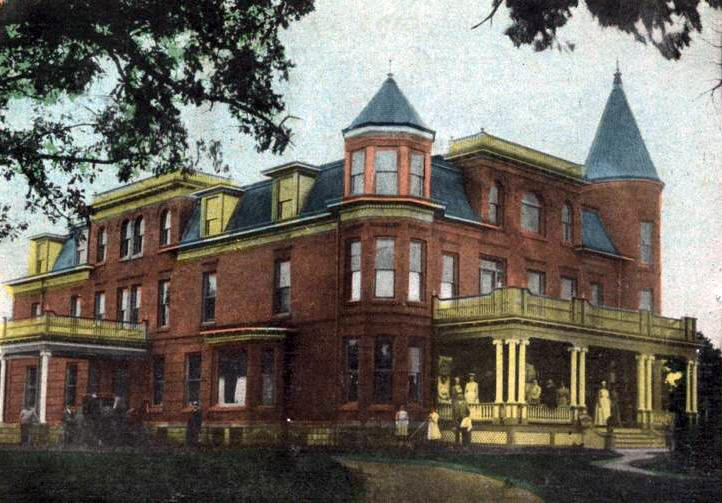
Dr. Kline’s Cadillac jerked into motion as I finished tying my scarf over my hat. As we motored away from the Sanitarium, my stomach fluttered—I’d only ridden in the front seat of the automobile with my employer once before. Today, although I relished the breeze in my face, the scent of lilacs, and the intrepid vibrations of the touring car’s engine against my toes, I dreaded the task before us.
Surely I could have bicycled to Mrs. Dr. Aldrich’s office as was my custom on Tuesdays when I assisted her, and Dr. Kline could have paid his respects to her some other time—perhaps on his way home from a morning house call. But he insisted on driving me. Dutifully I balanced a basket containing warm peach cobbler on my lap. Its tantalizing aroma mingled with the heady perfume of crabapple blossoms as we proceeded north on Ferry Street.
Unfortunately, my two employers were better kept apart. I had quickly discovered that five weeks ago when I’d begun filing and filling book orders at Dr. Flora Aldrich’s Eye, Ear, Nose, and Throat practice on my day off from the Sanitarium. How could I have anticipated the rivalry and animosity that simmered between them? New to Anoka, I had urgently needed pocket money. As an unproven commodity, I was fortunate to receive room and board at the Sanitarium, but a dollar a week came in handy, too.
“What a tragedy,” Dr. Kline intoned over the rumble of the engine, “that Mr. Southard didn’t avail himself of our neurasthenia treatments.”
I cringed. I desperately hoped Dr. Kline would not make such a remark to Dr. Flora. Perhaps I could prevent him from doing so. “But we don’t know his patient history or whether any of our methods would have helped.” By calling them our methods, I hoped Dr. Kline would sense my loyalty despite my dissent. “They’re still experimental, some say.”
Dr. Kline’s genial expression clouded. “By some, I assume you mean the Drs. Aldrich.”
Gripping the leather upholstery, I bit my lower lip. I had blundered headlong into a quagmire. As Dr. Kline stopped the automobile to let a delivery truck and several horse-drawn wagons pass along Main Street, I pondered a way out.
Quite by accident—I had considered it Providence—Dr. Flora Aldrich and her husband, Dr. Alanson Aldrich, had taken me under their wings. But whenever they instructed me in their style of medicine, my confidence in Dr. Kline’s began to fade. Indeed, that was likely their design. Working for both Dr. Kline and Dr. Flora, I often felt like a repeatedly intercepted football being rushed first toward one goalpost, then the other.
Certainly Dr. Kline deserved my first allegiance since he retained me as a Patient Educator—a provisional role I had invented and pitched to him like my own brand of patent medicine. Explaining treatment regimes to the Sanitarium’s residential patients allowed me to enter the medical field without becoming a nurse. If by the end of the summer I could prove my value, Dr. Kline would keep me on, with salary, and I would never return to St. Cloud to complete my final term of normal school.
Giving the Cadillac more gas, Dr. Kline freed us from a muddy rut. For me, too, the fastest way out of my predicament was the direct route. “Forgive my impertinence, Dr. Kline.”
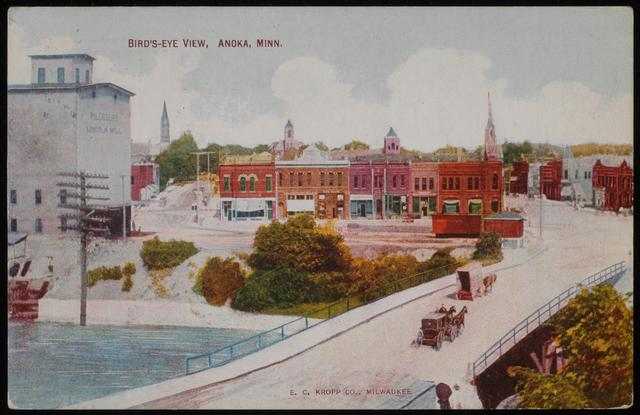
First laugh lines formed. Then his drooping mustache twitched playfully. “I can tolerate some impertinence, Camilla. At least until you turn twenty.” He pulled onto Main Street, and we crossed the Rum River. “The Aldriches haven’t seen the successes I’ve witnessed. Experimental? No. Extraordinary? Yes.”
I inclined my ear. Hearing about his fascinating cures never failed to thrill me.
“For example, the needle girl.”
“A seamstress?”
Dr. Kline’s indulgent chuckle kept time with the chugging engine. “I suppose you’ve never heard of the malady.”
I shook my head.
“She was twenty-four and came to us with thirteen needles and pins stuck beneath the skin of her left shoulder. If she’d had her way, she’d have added another every week at least.”
I gasped. “Hysteria?”
When Dr. Kline grimaced, I recalled he disliked the term.
“It was clearly neurasthenia.” He emphasized the word with a glance toward me. “She drove needles under her skin to relieve her anxious thoughts. Our diet, hydrotherapy, faradic treatments, and massage produced remarkable results. Upon her discharge, she had gained fifteen pounds, her willpower had improved, and she couldn’t wait to call on the friends she’d forsaken.”
We had only a block to go. Dr. Flora wouldn’t appreciate Dr. Kline equating Mr. Southard’s case to that of a needle girl. “But that’s nothing like Mrs. Dr. Aldrich’s—”
“Ah-oonkah-oonkah!”
A friendly honk from a passing runabout swallowed my words. Dr. Kline waved a greeting, then continued. “Then there was the fifty-year-old gentleman who came to us after fifteen years of depressive symptoms. Galvanic, sprays, and twice daily massage gave him new life. He no longer thought of suicide.” The auto bumped onto Third Avenue. “Science must devote itself more earnestly to curing nervous disorders. The problem is rampant. At the Sanitarium we provide hope, and we do no harm.”

We arrived at Colonial Hall, the Aldriches’ home and office. The stunning white columns stood proud and assured, yet in the adjacent building, the Cutters’ barn, a horror had unfolded only three days ago.
Dr. Kline helped me out of the Cadillac. When we entered the elegant foyer, the housekeeper ushered us to the parlor, and presently Dr. Flora appeared. I inhaled sharply. Like most of her patients, I had only seen her in her white blouse, black belt, and professional skirt. Dressed in black, she looked formidable indeed.
Bearing the peach cobbler, Dr. Kline approached her. “Dr. Aldrich, my wife and I extend our deepest sympathies on the loss of your father.”
Obviously moved, Dr. Flora accepted the basket, blinked a few times, and swallowed. She set the gift on a nearby table and offered her hand. My heart swelled as the two doctors united—if only momentarily.
We sat on matching red velvet chesterfields, and I expressed my condolences.
“We didn’t hear of any services,” Dr. Kline said gently.
“We had a small gathering here yesterday.” Dr. Flora lifted her chin slightly. “His ashes will be returned to my brother in New York.”
“Many from the community would attend a memorial.” Concern creased Dr. Kline’s face. “First Baptist would be willing to—”
“Reverend Goudy was present.” The bereaved woman sat rigidly straight, and her face hardened. “Alanson and others from the Masonic Lodge made a few remarks. My father was not a religious man, Dr. Kline.”
“I understand. But Baptists believe a memorial service benefits those who remain by providing comfort from the Scrip—”
“I’m not a Baptist.” Dr. Flora stood. “I’m Episcopalian. Now, if you’ll excuse me, my patients will begin arriving soon.”
Noticing Dr. Kline’s pained expression, I felt my face flush. She had repaid his kindness poorly. I shrugged an apology toward him as Dr. Flora’s figure receded. He nodded goodbye, and I trailed her to her examining room.
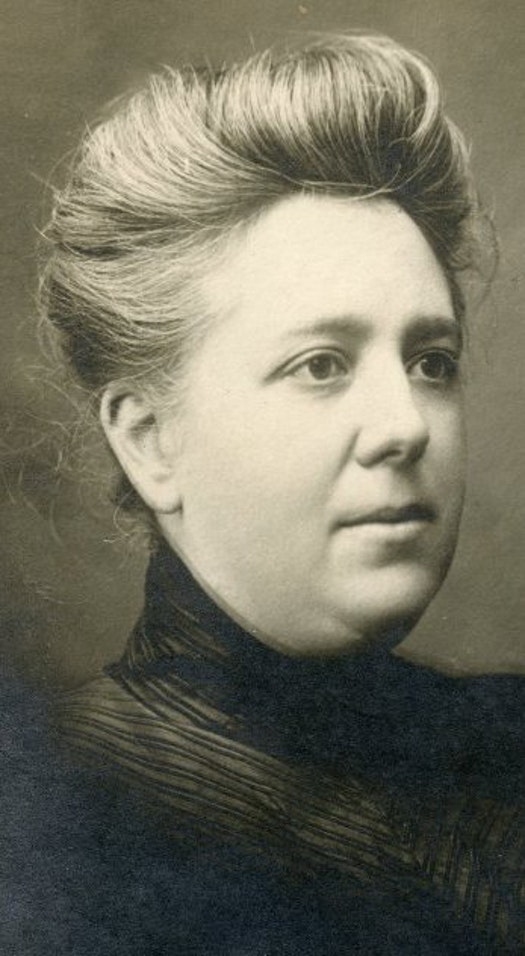
She pulled the door shut behind us, then strode to the window and gazed across the yard—toward the neighbor’s barn. Not wanting to intrude on her smoldering thoughts, I stood a few feet away.
“It was horrific, Camilla.” She squeezed her eyes shut. “A shotgun in his mouth. He blew his brains out.”
My stomach lurched, and I gripped my abdomen. For some reason, I had imagined poison. Tears stung my eyes. The poor woman!
“He’d been feeling ill, despite my treatments. I failed him.”
I stepped closer and touched her back. “You mustn’t blame yourself. It wasn’t your fault.”
“He was seventy-nine. I would have made him as comfortable as possible until his natural end.” She dabbed her eyes with her handkerchief. “I can’t blame my patients for questioning my competence when my own father didn’t trust my skills.”
Until now I’d never seen her display an ounce of doubt about her medical proficiency. I clasped her hands in mine. “Your patients wouldn’t think of holding this against you.”
“He brought me into this world, but he wouldn’t allow me to help ease his passage out of it.” She pulled away. “He knew how dearly I hold my oath—first do no harm—yet he did himself harm and shattered everything I stand for. Making me a counterfeit. A sham.”
I eyed the mantel clock. “Are you sure you should see patients today?”
She shook herself. “Into the dustbin with such thoughts.” Visibly, she donned her professional demeanor atop her mourning dress. “I shall exude strength and confidence.” She laughed ruefully. “I’m a childless woman who wrote a book called My Child and I. For their sakes, I pretend. And they believe.”
She nodded toward the door.
With aching heart, I opened it. “Dr. Aldrich will see you now.”
 Rebecca May Hope